


FAIRYTALE OF NEW YORK
Decades after its release, the duet about a couple who have fallen on hard times is still by many as one of the greatest christmas songs of all times.
Once upon a time a band set out to make a Christmas song. Not about snow or sleigh rides or or miracles, but lost youth and dreams. A song in which Christmas is as much the problem as it is the solution. A kind of anti-Christmas song that ended up being, for a generation, the Christmas song.
That song, Fairytale of New York by the Pogues, has already re-entered the Top 20 every December since 2005, and shows no sign of losing its . It is loved because it feels more emotionally “real” than the sentimentality of
White Christmas or the bullish bonhomie of Merry Xmas Everybody, but it contains elements of both and the story it tells is an unreal fantasy of 1940s New York dreamed up in 1980s London. The story of the song is a yarn in itself: how it took more than two years to get right and became, over time, far bigger than the people who made it. As Pogues accordion-player James Fearnley says: “It’s like Fairytale of New York went off and its own planet.”
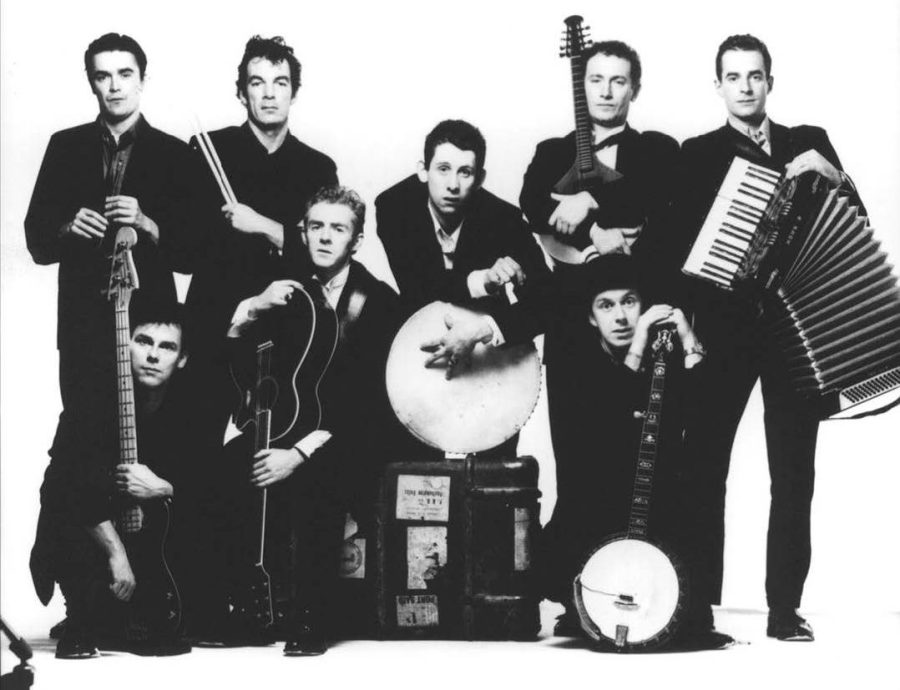
Appropriately for a song that pivots on an argument, there is disagreement as to where the idea originated. Fearnley, who recently published a memoir, Here Comes Everybody: The Story of the Pogues, remembers manager Frank Murray suggesting that they cover the Band’s song Christmas Must be Tonight. “It was an awful song. We probably said, $%&@ that, we can do our own.”
Singer Shane MacGowan maintains that Elvis Costello, who produced the Pogues’ 1985 masterpiece Rum, Sodomy & the Lash, the singer that he couldn’t write a Christmas duet to sing with bass player (and Costello’s future wife) Cait O’Riordan.
Either way, a Christmas song was a good idea. “For a band like the Pogues, very strongly rooted in all kinds of traditions rather than the , it was a – ,” says banjo-player and co-writer Jem Finer. Not to mention the fact that MacGowan was born on Christmas Day .
The Pogues had formed amid the grimy pubs and bedsits of London’s King’s Cross in 1982. Although their name (“Pogue mahone” means “kiss my arse” in Gaelic) and many of their influences were , most of the band weren’t, and their interest in folk songs and historical narratives roamed far and wide. They aspired to
.